Guides
Why small-town county historical societies close in winter in the Midwest
County historical societies in the Midwest close for winter over staffing, heat and money, so confirm Wisconsin and Minnesota hours before you drive.
What to take away
- Most winter closures are a staffing and heating problem, not a shortage of things to see.
- December through March is the dead zone, with late November the usual hinge.
- Call the society itself the day before you drive, then keep a backup stop in mind.
- Research rooms and by-appointment visits often run while the exhibit hall is dark.
Why a county society runs on summer staff
A county historical society is a private nonprofit, not a government office. It keeps local documents, runs a small museum and staffs a research room. Many hold 501(c)(3) status and answer to a board of local volunteers. The historical society model has worked this way since the 1800s.
Staffing breaks first. A typical county society pays one part-time director and hires two or three students for the summer. When school resumes in late August, paid hours drop. The director can keep the lights on but cannot sit at the front desk seven days a week.
Volunteers cover part of the gap. Retired teachers, genealogists and farm families work the desk in July because the drive is short and the roads are dry. In January the same people face ice, dark afternoons and their own travel plans. A docent twenty minutes away on dry pavement is an hour away in a snowstorm.
Insurance and training add cost. A museum open to the public needs someone on site, a working phone and a plan for a visitor who falls on the stairs. Many county societies run a typical annual budget between $15,000 and $60,000, drawn from dues, donations and small grants.
The pattern shows from the road: a brick house, a granite marker, a sign with limited hours. That is a budget pattern, not a secret. Set it beside the way small museums operate nationwide and the Midwest version looks ordinary.
Wisconsin and Minnesota: grants, dues and distance
Wisconsin and Minnesota make good examples. Both have strong state historical societies and weak county ones. The Wisconsin Historical Society runs its own network of sites and a large library. County societies sit outside that budget and raise their own money.
Three counties show the range. The Door County Historical Society in Sturgeon Bay, Wisconsin, runs a county museum and the Eagle Bluff Lighthouse, and both are typically closed from late October to May.
The Blue Earth County Historical Society in Mankato, Minnesota, keeps a museum and an archive. The Otter Tail County Historical Society in Fergus Falls, Minnesota, keeps a county museum and a research room. Both set winter hours locally, so the phone call decides.
Grants arrive on a calendar. A society may win a preservation award in spring, spend the summer on a roof or a furnace, and reach December with nothing left for wages. The National Trust for Historic Preservation lists programs many of these groups use for exactly that repair work.
Dues arrive unevenly. A society that bills in June has cash in July and an empty account in February. That alone can decide whether the door opens in winter.
Minnesota adds distance. A county can be larger than some Eastern states, and the nearest open museum may be an hour away.
Both states lean on summer tourism. A lakes country society sees its heaviest traffic in July and August. Winter visitors are few, and most come for family records rather than exhibits, so each one costs more to serve.
If you are weighing a longer route through several states, read the small museum destinations worth considering before you commit to dates.
Which months the closures hit hardest
The short answer is December through March. The long answer varies by state, by building and by who is available.
| Period | Typical status | What to expect |
|---|---|---|
| September to mid-November | Usually open | Regular hours, sometimes reduced after Labor Day. Fall events and school groups stay on the calendar. |
| Late November | The hinge | Many societies hold one holiday open house, then close until spring. |
| December | Closed at most small societies | Exhibit halls dark. A research room may open by appointment. |
| January | Closed at most small societies | The quietest month. Ask whether a research day is running. |
| February | Closed at most small societies | Same pattern as January. Scanning days and library lectures fill part of it. |
| March | Reopening plans, weather permitting | Dates shift with each thaw. Northern counties often wait until April. |
| April | Mixed | Southern counties may reopen. Northern Wisconsin and northern Minnesota often stay shut. |
| May to August | Open | Summer hours with student staff. The safest window for a long drive. |
County society season at a glance
- May to AugustOpen six days, full exhibits
- September to OctoberReduced weekend hours
- NovemberHoliday open house, then shutdown
- December to FebruaryMostly closed, research by appointment
- March to AprilReopening, hours change weekly
Late November is the hinge. Many societies hold one holiday open house, then lock up until spring. Driving through Iowa, Illinois or southern Minnesota in the first week of December, assume the museum is shut unless you have confirmed otherwise.
January and February are the dead zone. Some societies keep a research room open one day a week, usually a Tuesday or Wednesday, staffed by one person.
March fools planners. The calendar says spring, the weather disagrees, and reopening dates shift with each thaw. Northern Wisconsin and northern Minnesota can hold snow into April, which pushes the opening later than in southern counties.
In practice, most Wisconsin and Minnesota county societies reopen in May. Southern counties sometimes open in late April, and northern ones sometimes wait until Memorial Day.
Climate records help. NOAA Climate Data Online pulls temperature and snowfall for a single county.
Old buildings, heat and the case for closing
Most county museums are not purpose-built. They are houses, former schools, depots, churches or courthouses. That is the charm and the problem.
An 1880s frame house with single-pane windows loses heat fast. Holding it at a temperature that protects the collections typically costs $3,000 to $6,000 a season, against $900 to $1,500 for a modern building of the same size. Frozen pipes are the bigger fear: one burst radiator can ruin a collection that took fifty years to assemble.
Insurance often requires someone on site whenever the public is present, and some policies require heat to stay on year round. A board facing that bill has two choices: pay it and cut programs, or close and keep the money.
Many of these buildings sit on the National Register of Historic Places, which opens doors to preservation grants and tax incentives but limits changes to windows, doors and heating systems.
The National Park Service publishes a weekly list of new nominations.
So a winter closure is not laziness or secrecy. It is thin walls, a small budget and a board that would rather reopen in May than risk the collection in January.
How to confirm winter hours before you drive
Do not trust a search result. Hours in map listings and aggregator sites are often years out of date for small societies, and a wrong listing costs you a two-hour drive each way.
Work through this before you leave:
- Check the society's own website or social page for current hours.
- Call the number on that page and speak to a person, not a recording.
- Confirm again the day before you drive, once the forecast settles.
- Note one backup stop that stays open year round.
Before a winter drive
- Find the society's own website or Facebook page
- Look for a season line in hours
- Call and leave a message if no answer
- Email about research room hours
- Check county tourism winter calendar
- Confirm the day before you drive
- Have a second site in mind
That last item matters more than it sounds. Winter drives go wrong when the only planned stop is closed. Keep a list of backup stops that stay open year round: a courthouse, a public library with a local history room, a state historic site with paid staff.
A first visit to a small society museum differs from a city museum. Hours are shorter, and the volunteer may be the person who wrote the exhibit labels.
What stays open when the museum is closed
A closed exhibit hall does not mean a closed society. Most county societies keep working through winter on the parts visitors never see.
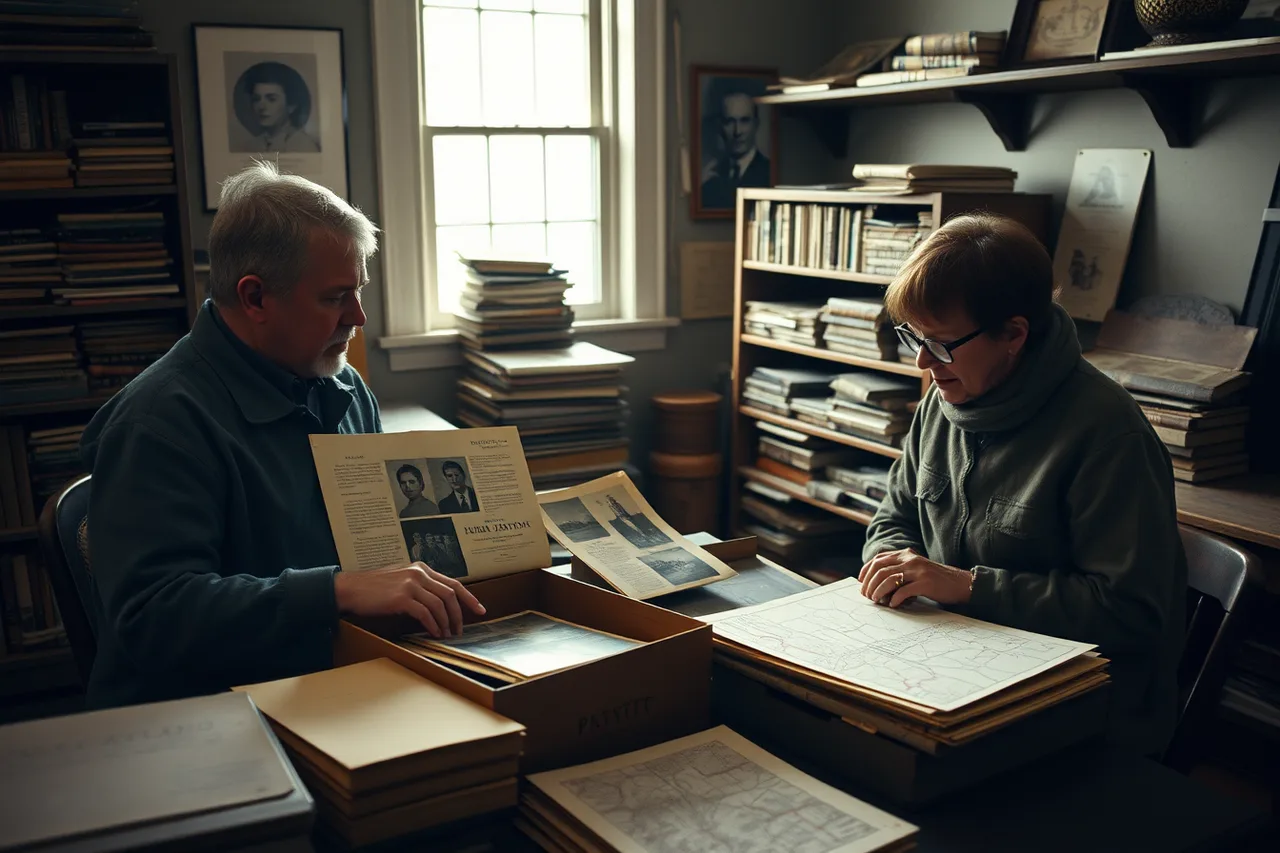
Archives and research rooms are the best winter option. Genealogists, property researchers and students use them year round. Many open one or two days a week by appointment, and the person helping you is often the same director who would otherwise be at the front desk.
By-appointment visits are common and usually free or cheap. Email a week ahead, say what you want to see, and offer two or three dates. A society that will not open the museum for one visitor will often open a research table for someone with a specific question.
Off-season events fill part of the gap. Look for annual meetings, cemetery walks, holiday open houses, lecture series at the public library, and scanning days when the public brings in old photographs. That is often the society's real social life.
Digitized collections are the quiet third option. Many Wisconsin and Minnesota societies have put photographs, plat maps and newspapers online, sometimes through a state or university partnership. You can do real research from a couch in February.
If winter is the only time you have, build the day around what is open, then save the county museum for a warmer month. For an overnight, see where to stay.
Late spring and early fall give you open doors, mild weather and staff who are not yet worn down by summer crowds. That is when these societies are at their best.
Common questions
Why do county historical societies close in winter?
Winter brings few visitors, high heating costs and no summer staff. Closing protects the building and the collection, and it saves money the society needs for the rest of the year. The decision usually belongs to the board, not to any state office.
Are all Midwest county museums closed from December to March?
No. State historic sites and larger county museums with paid staff often stay open. Small volunteer-run societies are the ones that typically shut, and the dates vary by county. Confirm with the site itself rather than a directory.
How do I find out if a specific society is open?
Check its own website or social page, then call or email. Confirm again the day before you drive, because winter hours can change with weather and volunteer availability. If you need the research room, ask about it separately.
Can I still use the archives when the museum is closed?
Often yes. Many societies offer research appointments in winter, usually one or two days a week. Ask specifically about the research room, since it may follow a different schedule than the exhibit hall.