Reviews
Value, upkeep or fit: how specialty museum exhibits compare
Permanent, temporary and traveling exhibitions compared: what each type can show, what it costs a small museum, and which is worth timing a trip for.
Specialty museum exhibits come in three forms. A permanent installation may sit unchanged since the building reopened. A temporary show is often built from the museum's own storage. A traveling exhibition arrives in crates and leaves in three months.
The three differ in what they can show, what they cost, and whether they are worth planning a trip around.
What to take away
- Permanent galleries show the collection; temporary shows reveal what is in storage.
- Traveling exhibitions bring material a small museum could never own.
- Borrowing significant objects requires security and environmental standards.
- Timing matters most for traveling shows and least for permanent galleries.
The three types compared
Strength
- Permanent gallery
- Depth, and always open
- Temporary in-house
- Brings storage into the light
- Traveling exhibition
- Objects far beyond local means
- The Star-Spangled Banner, National Museum of American History
- The Fort McHenry garrison flag, 30 by 34 feet, in a dim climate-controlled case
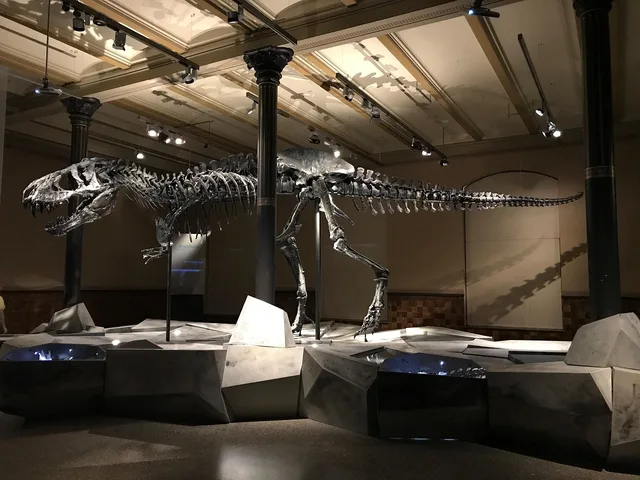
- Sue, Field Museum, Chicago
- One of the most complete T. rex skeletons found
- Costume Institute exhibitions, Metropolitan Museum of Art
- Pulls the collection and its storage into a themed show
- Museum on Main Street, Smithsonian traveling series
- Brings a national exhibition to towns with no other venue
Weakness
- Permanent gallery
- Interpretation may be decades old
- Temporary in-house
- Short run, often small
- Traveling exhibition
- Generic to the region
- The Star-Spangled Banner, National Museum of American History
- One object, and a fixed display
- Sue, Field Museum, Chicago
- Permanent, so the view never changes
- Costume Institute exhibitions, Metropolitan Museum of Art
- Runs about three months, timed tickets
- Museum on Main Street, Smithsonian traveling series
- Panels and reproductions more than originals
Worth timing a trip for
- Permanent gallery
- No, visit any time
- Temporary in-house
- Often yes
- Traveling exhibition
- Yes, and book early
- The Star-Spangled Banner, National Museum of American History
- No, and admission is free
- Sue, Field Museum, Chicago
- No, unless a ticketed show overlaps
- Costume Institute exhibitions, Metropolitan Museum of Art
- Yes, book before the run opens
- Museum on Main Street, Smithsonian traveling series
- Yes, the run is about six to eight weeks
A permanent gallery carries upkeep rather than a rental fee: climate control, cases and label updates. A temporary in-house show typically runs $5,000 to $50,000, mostly for design, fabrication and staff time.
Three exhibition types compared
Permanent gallery
- Strength
- Depth, always open
- Weakness
- Old interpretation
- Worth timing trip
- No, visit any time
- Cost
- Upkeep, no rental
Temporary in-house
- Strength
- Storage into light
- Weakness
- Short run, small
- Worth timing trip
- Often yes
- Cost
- $5,000-$50,000
Traveling exhibition
- Strength
- Objects beyond local means
- Weakness
- Generic to region
- Worth timing trip
- Yes, book early
- Cost
- Adds rental fee
A traveling exhibition adds a rental fee, inbound shipping and insurance. In most markets that lands between $10,000 and $75,000 for a three-month booking, depending on object count, cases and couriers.
Museum on Main Street works differently. State humanities councils pick the host towns, and the Smithsonian supplies the exhibition and its crates. Hosts cover local programming, staffing and events, so ask your state council what the host share includes.
The Star-Spangled Banner left display in 1998 and returned in 2008, in a purpose-built case, after a decade of conservation.
Why borrowing is hard, and what that tells you
A small museum showing a genuinely significant object has passed a real test. The National Archives describes its terms for borrowing holdings for exhibition. They are open to museums and cultural institutions with established exhibition programs meeting security and environmental requirements.
Lender facility requirements
- Temperature near 68-72 degrees Fahrenheit
- Stable relative humidity
- Locked secure cases
- Light around 5 foot-candles (50 lux)
- Documented handling and condition reports
Its loans have ranged from presidential material and letters of well-known figures to pension records, immigration and military service files. They have included court records, petitions, patents, maps and photographs that tell stories of less famous Americans.
If a county museum has borrowed from a national institution, its building meets standards that are not trivial: monitored climate, controlled light, secure cases and documented handling. The approval says as much about the building and staff as about the object.
Lenders ask for a standard facility report, the form the American Alliance of Museums maintains. Common conditions include temperature near 68 to 72 degrees Fahrenheit, stable relative humidity, locked cases, and light levels around 5 foot-candles (50 lux) for paper and textiles.
A courier often travels with a high-value object and stays through installation. The courier signs condition reports at installation and again at de-installation.
Traveling exhibitions reach places nothing else does
A national infrastructure brings good exhibitions to small towns. The National Endowment for the Humanities describes how state councils host Museum on Main Street exhibits, a partnership of the Smithsonian Institution Traveling Exhibition Service, state humanities councils, and institutions nationwide.
It specifically serves small town museums and rural residents, letting exhibitions tour to communities that would otherwise miss them.
Recent Museum on Main Street titles include "Crossroads: Change in Rural America," "Water/Ways" and "Voices and Votes: Democracy in America." Each stops for about six to eight weeks, usually in a library, a historical society or a fire hall.
Panel exhibitions are the least expensive to host. "Righting a Wrong: Japanese Americans and World War II," which travels through the Smithsonian Institution Traveling Exhibition Service, is text, photographs and graphics that fit a library meeting room.
At the top of the market, "Treasures of Tutankhamun" shows how far the format can go. The Metropolitan Museum of Art organized that tour, which reached American museums between 1976 and 1979 and drew about eight million visitors.
For a traveler, that means the best show in a region is sometimes in the smallest building, for eight weeks only. Ask every museum on your route what is visiting and when.
It also changes how to read a modest venue: a fire hall hosting a traveling exhibition for two months is briefly a serious destination.
The local response is usually the interesting part. Host communities normally add their own material alongside the touring content, the half you cannot see anywhere else.
How to judge fit
- Does the exhibition use the museum's own collection, or is it a package?
- Is the interpretation written by someone who knows this place?
- Are objects labeled with provenance, or only with description?
- Is there anything you could not see somewhere else?
- How long is the run, and when is the quietest hour?
The kinds of institution most likely to host these shows are set out in seventeen kinds of small museum destination, and the practical steps for a visit built around a show are in planning steps for a specialty exhibit visit.
Common questions
Is a traveling exhibition worth a long drive?
Why do permanent galleries feel dated?
Can I see objects that are not on display?
How far ahead are traveling shows scheduled?
In this guide
- Six Steps for Reading Specialty Museum ExhibitsUse six steps to read museum exhibits at a specialty museum, from checking the object list to returning to the signs and objects that anchor the display.
- Small museums: why museum exhibits rotate and when to goWhy small museums rotate museum exhibits: fading risk, rest periods and facsimiles, tour schedules, program seasons, and five steps for timing your visit.
- What to bring to a specialty museum exhibit, and what to leave: the useful versionThe kit and the vocabulary worth carrying into a specialty exhibition, so you can read what is in the case rather than only the label beside it.
- Specialty museum exhibits: where costs sit, in estimatesWhy specialty museum exhibits cost extra: estimated visitor and mounting lines, from loan fees and freight to timed entry, plus the rules behind them.
- Museum exhibits: how to find guides for a specialty showWhere to find people who can interpret specialty museum exhibits: curators' credits, teachers trained on funded institutes, and unadvertised talks.